
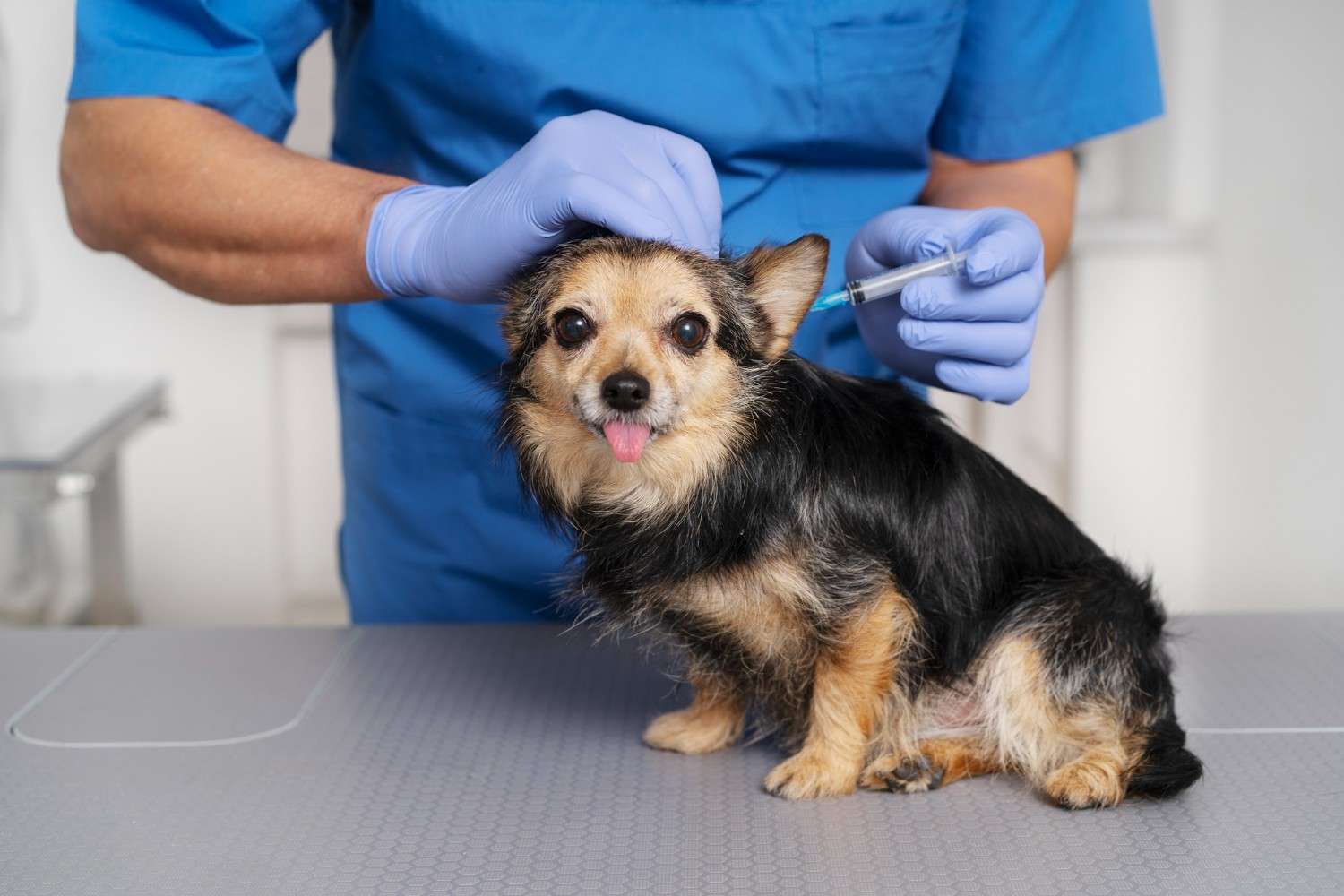
Canine parvovirus kills up to 91% of unvaccinated dogs who contract it. One missed shot can cost your dog its life and cost you thousands in emergency vet bills. The good news? A simple, affordable vaccine changes everything.
If you’ve ever watched a puppy go from bouncy and bright-eyed to dangerously ill in 48 hours, you understand why veterinarians call parvo one of the most terrifying diseases in the dog world. The parvo vaccine for dogs is not optional. It is, without question, one of the most critical decisions you’ll make as a pet owner.
Choosing the right time to give the parvo vaccine for dogs is one of the most critical decisions you’ll make in your puppy’s first few months. Miss the window, and you’re leaving them exposed during the most vulnerable stage of their life.
Table of Contents
What Is Canine Parvovirus and Why Is It So Dangerous?
Canine parvovirus (CPV-2) is a very contagious virus that attacks two important parts of your dog’s body: the gastrointestinal tract and the bone marrow. It attacks the gut’s protective lining and at the same time stops the immune system from fighting back.
The virus spreads through direct contact with infected dogs or through contaminated feces and here’s the terrifying part: it can survive in soil and on surfaces for up to a year. You can track it into your home on your shoes without even knowing it.
- Most at risk: Unvaccinated puppies between 6 weeks and 6 months old
- Survival rate without treatment: As low as 9–10%
- Survival rate with aggressive treatment: 68–92%
- Cost of hospitalization: $1,500–$3,000+ for intensive care
Expert Insight

Parvovirus is stable enough to survive on inanimate objects kennels, food bowls, leashes, and clothing. Standard household cleaners won't kill it. You need a diluted bleach solution (1:32 ratio) to decontaminate surfaces effectively.
What are the signs of parvo in dogs?
Knowing parvo symptoms in dogs early can be the difference between life and death. The clinical signs typically appear 3–7 days after exposure:
- Severe, bloody diarrhea (often with a distinctive, foul odor)
- Profuse vomiting
- Lethargy and sudden loss of energy
- Loss of appetite and refusal to drink water
- Fever (or below-normal body temperature in severe cases)
- Rapid weight loss and dehydration
If your dog shows any combination of these symptoms, get to a vet immediately. Don’t wait for things to “settle down.” Parvo moves fast.
How Does the Parvo Vaccine for Dogs Actually Work?
The canine parvovirus vaccine is a modified-live virus (MLV) vaccine. Unlike killed-virus vaccines, MLV vaccines use a weakened but still living form of the virus. This teaches your dog’s immune system to recognize and neutralize CPV without causing actual disease.
Here’s the elegant biology behind it: when the weakened virus is injected, it replicates just enough to start a strong antibody response. This meeting leaves a mark on your dog’s B-cells, which then make “memory cells.” If the real virus ever comes back, those memory cells quickly and strongly fight back.
The parvo vaccine is almost always given as part of a combination vaccine the DHPP vaccine which protects against:
- D — Distemper
- H — Hepatitis (Adenovirus)
- P — Parvovirus
- P — Parainfluenza
Did You Know

The parvovirus vaccine is classified as a "core" vaccine by the World Small Animal Veterinary Association (WSAVA) meaning every dog, everywhere, regardless of lifestyle, should receive it. There are no exceptions based on breed, size, or whether your dog is "mostly indoors."
The Complete Puppy Vaccination Schedule for Parvo
Puppies get parvo shots on a set schedule. The reason is that when puppies are born, they get antibodies from their mother’s milk. At first, these antibodies protect them, but they also make vaccines less effective. The series makes sure that active vaccine immunity starts working smoothly as maternal immunity fades away.
| Age | Vaccine | Notes |
| 6–8 weeks | DHPP (1st dose) | Begin series; given by breeder or vet |
| 10–12 weeks | DHPP (2nd dose) | Critical window; don’t delay |
| 14–16 weeks | DHPP (3rd dose) | Final puppy dose; maternal antibodies have fully waned |
| 12–16 months | DHPP booster | First adult booster after puppy series |
| Every 1–3 years | DHPP booster | Based on titer testing or vet recommendation |
Critical Warning

Do not take your unvaccinated puppy to dog parks, pet stores, or high-traffic areas until 1–2 weeks after their 3rd DHPP dose. The "immunity gap" is real and parvovirus is everywhere you can't see it.
How long does the parvo vaccine last in dogs?
This is one of the most commonly searched questions and the answer surprises many owners. After the full puppy series and the 1-year booster, research shows the parvo vaccine can provide solid immunity for 3 or more years in many dogs.
However, this doesn’t mean you skip annual vet visits. Your vet may recommend titer testing a blood test that measures actual antibody levels to determine whether a parvo booster shot for dogs is truly needed. This is a smarter, evidence-based approach compared to automatic annual boosters.
What Are the Side Effects of the Parvo Vaccine?
Here’s where many owners get nervous and understandably so. But let’s put this in perspective: the risks of not vaccinating vastly outweigh the risks of vaccinating. That said, you deserve to know exactly what to expect.
What mild side effects are normal after vaccination?
- Mild lethargy or “off” behavior for 12–24 hours
- Slight soreness or swelling at the injection site
- Reduced appetite for one day
- Low-grade fever
These reactions are actually a sign that your dog’s immune system is doing exactly what it’s supposed to mounting a response.
What are the serious (but rare) vaccine reactions to watch for?
- Facial swelling or hives within 30 minutes of vaccination (anaphylaxis)
- Vomiting or collapse shortly after leaving the clinic
- Difficulty breathing
- Extreme pale gums
Anaphylactic reactions occur in roughly 1 in 15,000 vaccine doses. If you notice any of these signs within an hour of vaccination, return to the vet immediately. This is why most clinics ask you to wait in the waiting room for 15–20 minutes post-vaccination.
Expert Tip

If your dog has had a previous vaccine reaction, tell your vet before the appointment not after. They can pre-treat with antihistamines or adjust the protocol to dramatically reduce risk.
How Much Does the Parvo Vaccine for Dogs Cost?
A lot of pet owners are worried about the cost, and I won’t ignore it. At a private vet clinic, the parvo vaccine that comes with the DHPP combination usually costs between $15 and $45 per dose. It is often available for $10 to $20 at low-cost clinics and animal shelters.
Compare that to the cost of treating a parvo-infected dog: hospitalization, IV fluids, anti-nausea medications, and intensive monitoring can run $1,500–$4,000 and even then, the outcome is never guaranteed.
Prevention isn’t just medically responsible. It’s financially smart.
Can Adult or Senior Dogs Still Get Parvo?
Yes, and this myth needs to be broken down right away. Puppies are statistically the most at risk, but unvaccinated adult dogs are not safe either. Older dogs with weak immune systems are also at a higher risk, even if they were vaccinated before but didn’t get their boosters on time.
If you’ve adopted an adult dog with unknown vaccination history, your vet will typically recommend starting the series or running a titer test. Don’t assume age equals protection. Assume nothing. Test or vaccinate.
The Bottom Line: Don’t Gamble with Parvo
The parvo vaccine for dogs is one of the most well-researched, safe, and effective tools in veterinary medicine. It costs less than a dinner out, takes minutes to administer, and protects your dog from a disease that kills without warning.
Follow your vet’s recommended schedule. Don’t skip booster shots. Know the symptoms. And if you’re unsure about your dog’s vaccination status, ask about titer testing it’s the smartest way to know exactly where your dog stands.
Your dog is counting on you. Make sure the parvo vaccine for dogs is at the top of your pet health checklist starting today.
FAQs
No vaccine offers 100% protection, but the parvo vaccine is highly effective reducing risk by over 99% in properly immunized dogs. In rare breakthrough cases, vaccinated dogs typically experience much milder illness and recover faster than unvaccinated dogs.
You can always give your dog a parvo shot. Adult dogs that have never been vaccinated should get two doses of the vaccine, spaced 3 to 4 weeks apart, and then regular boosters. Ask your vet what the best way to care for your dog is based on their age and health.
The puppy series usually ends between 14 and 16 weeks, and full protection begins one to two weeks after the last dose. Until then, keep your puppy away from dogs that haven’t been vaccinated and crowded places. You can safely be around vaccinated dogs.
The puppy series, along with a booster shot at 12–16 months, usually gives the dog strong immunity for about three years. According to AAHA guidelines, adults should get boosters every three years after that. Some vets use titer testing, a blood test that checks the levels of antibodies, to see if a booster is really needed. This keeps pets from getting vaccinated again when they don’t need to.
Yes, the immunity that puppy vaccines give you does fade over time. Some dogs can stay protected for years without boosters, but you can’t tell which ones they are without titer testing. Not getting adult boosters, especially in places where you are likely to come into contact with the virus, does raise the risk of getting parvo. If your dog is overdue, make an appointment to catch up as soon as you can.
Found this helpful? Share it with a fellow dog owner or your local pet community. One conversation could save a dog’s life.