
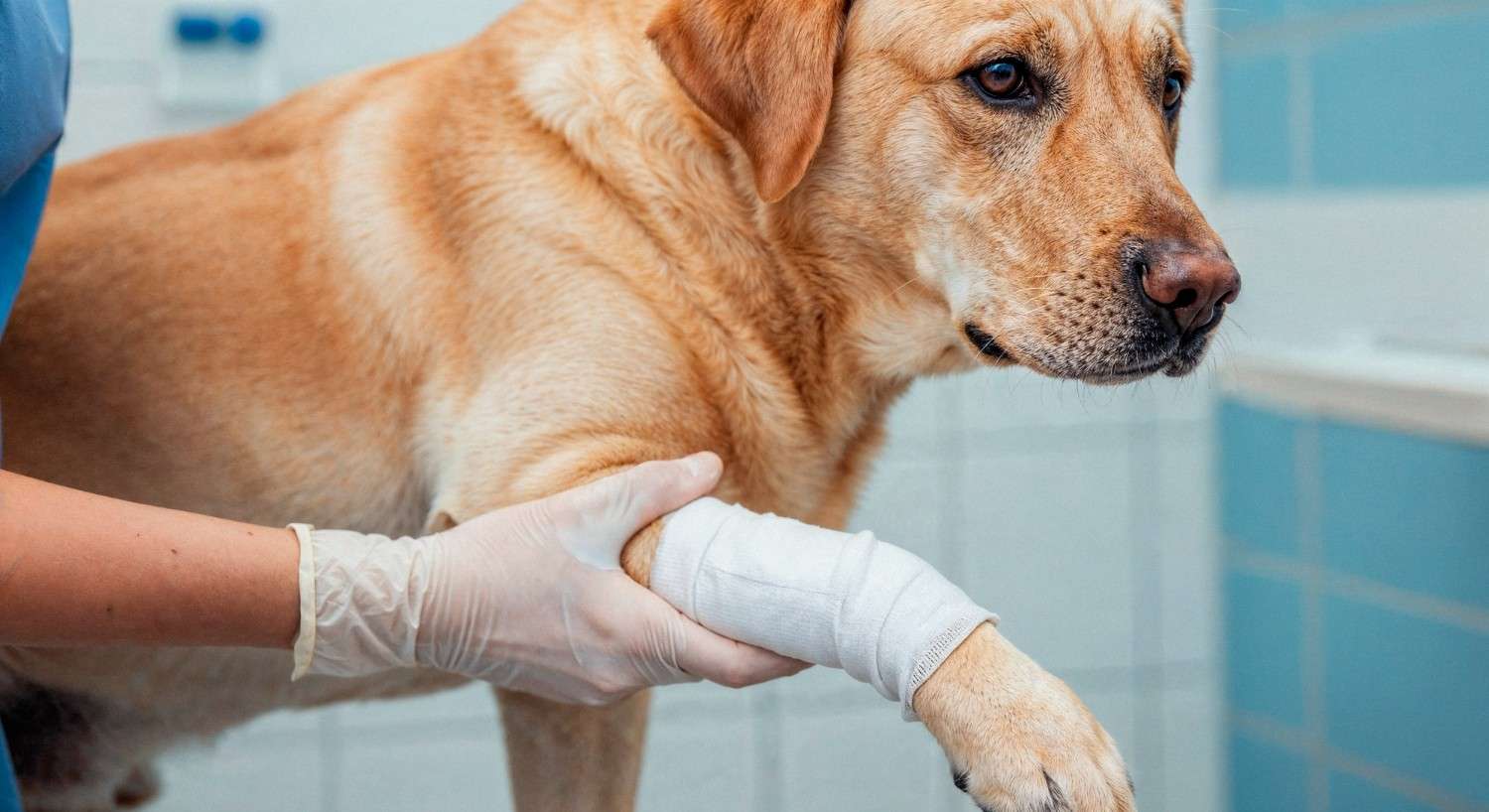
Your dog comes limping in from the backyard, paw bleeding, tail still wagging. You panic. They don’t. But here’s the truth: how you handle the next 10 minutes can mean the difference between a quick recovery and a vet emergency.
Taking care of a dog’s wound is not just a veterinary issue, it is a life skill every pet owner should have in their back pocket. “Dogs love to explore. They dig, run, wrestle and explore thorny bushes without a blink. And the injuries? They happen.
In this guide, you’ll learn exactly how to assess, clean, treat, and monitor your dog’s wound at home and when it’s absolutely time to call the vet. Whether you’re a first-time dog parent or a zoology student studying animal physiology, these science-backed steps will give you confidence when it matters most.
Let’s get into it.
Table of Contents
What Counts as a Dog Wound? (And Why It Matters)
All wounds are not the same. How you treat it depends on knowing what you’re dealing with.
Some common types of dog wounds are:
Lacerations – Cuts made by sharp objects like glass or metal
Puncture wounds – small deep holes usually caused by bites, thorns or nails
Abrasions – scrapes on the surface caused by rough pavement or falls
Avulsions – torn tissue usually from getting caught on fences
Burns – caused by hot surfaces, chemicals or friction.
Puncture wounds are the sneakiest of them all. They look minor on the surface but can tunnel deep into tissue, trapping bacteria in a warm, moist environment basically a five-star hotel for infection.
Regardless of wound type, the foundational principles of dog wound care remain the same: stop the bleeding, clean thoroughly, protect the area, and monitor closely. The type of wound simply determines how urgently and aggressively you apply those steps.
Expert Tip

Dogs have a higher pain tolerance than humans, which is both a survival advantage and a diagnostic challenge. A dog may walk normally on a punctured paw for hours before showing distress. Never judge wound severity by behavior alone.
Step-by-Step Dog Wound Care: The 7-Step Protocol
Step 1: Stay Calm and Restrain Your Dog Safely
Dogs reflect your energy. If you are frantic, they panic. A panicked dog will bite even the most loving owner. Breathe. Talk softly. Wrap your dog in a towel or have someone help you hold them still.
If the wound is on the face or near the mouth, consider a muzzle as a safety measure for both of you, not a punishment.
It is good for your own nerves, but keeping calm when dealing with a dog wound will impact your dog’s stress response. A calm owner means a calmer patient, and a calmer patient means that you are able to more accurately assess and treat the wound without missing anything important.
Step 2: Stop the Bleeding First
First, stop the bleeding.
- Use a clean cloth or sterile gauze, and apply gentle but firm pressure
- Do not lift for 3–5 minutes. Each time you look, you interfere with the clotting process
- If possible, raise the injured limb.
If the bleeding has not slowed after 10 minutes or blood is spurting out in a rhythmic fashion (indicating arterial damage), go to the vet immediately.
Expert Tip

Never use a tourniquet on a dog wound unless you're a trained professional. Improper application can cause permanent nerve or tissue damage.
Step 3: Clean the Wound – This Step Saves Lives
Cleaning is the most critical part of dog wound care at home. Infection is your enemy, and bacteria move fast.
Here’s how to properly clean a dog wound:
- Wear disposable gloves.
- Flush the wound gently with clean lukewarm water or sterile saline for a minimum of 5 minutes.
- Flush with a syringe or clean cloth high pressure flushing is far superior to dabbing for removing debris and bacteria.
- Trim the fur around the wound with round-tipped scissors to prevent contamination (hair is a bacteria trap).
- Apply a thin layer of diluted chlorhexidine solution (0.05%). It’s the gold standard for wound disinfection in veterinary medicine.
What NOT to use:
❌ Hydrogen peroxide destroys healthy tissue and slows healing
❌ Rubbing alcohol causes pain and cellular damage
❌ Iodine at full concentration is too harsh for open wounds
❌ Neosporin with pain relief (lidocaine) toxic to dogs if licked
It is at this cleaning step that many pet owners make expensive mistakes in home dog wound care. The best intentions are not enough. Using the wrong product can delay healing by days or create new complications. When in doubt, plain sterile saline is always a safe bet until you can get to your vet.
Did you know

A dog's saliva contains lysozyme, an enzyme with mild antibacterial properties. That's why dogs lick wounds instinctively. But saliva also carries Pasteurella and other bacteria that can cause serious infections. The licking impulse helps and harms, which is why an E-collar (the "cone of shame") is often necessary.
Step 4: Apply a Wound Dressing
Once the wound is clean, protect it.
- For minor cuts and abrasions: Apply a thin layer of pet-safe wound spray or plain petroleum jelly, then cover with a non-stick sterile pad and secure with vet wrap.
- For deeper wounds: Apply sterile gauze, then a secondary absorbent layer, then secure firmly but not so tight you cut off circulation (you should be able to slip two fingers under the bandage)
Change the dressing every 24–48 hours, or immediately if it gets wet or dirty.
Step 5: Prevent Your Dog From Licking the Wound
This is where most home treatment plans fall apart.
Dogs are relentless lickers, and a licked wound is a contaminated wound. Use one of these strategies:
- E-collar (cone) – the classic solution; annoying for your dog, essential for healing
- Inflatable donut collar – more comfortable alternative for some wound locations
- Bitter-tasting wound spray – adds a deterrent coating directly on the bandage
- Recovery suit/bodysuit – great for torso wounds; looks adorable too
Step 6: Monitor for Signs of Infection
Check the wound at least twice daily. Healing should progress; a little redness on day one is normal. What’s not normal is things getting worse.
Signs of dog wound infection to watch for:
- Increasing redness, swelling, or warmth around the wound
- Yellow/green or brown foul-smelling discharge
- Wounds separating rather than closing edges
- Your dog is lethargic, won’t eat or has a fever
- The wound is not getting better after 48 hours
Think of the course of infection as a traffic light. Mild redness = yellow, continue carefully. Pus + fever = red; call your vet right now and stop.
Expert Insight

A dog’s fever isn’t the same as a human fever. Symptoms include a dry or warm nose, a loss of appetite, shivering or unusually low energy. The normal temperature of a dog is 38-39.2 C (101-102.5 F). If the temperature is higher than 39.4 °C (103 °F), call the vet.
Step 7: Support Healing From the Inside Out
Wound healing isn’t just a surface job; it’s a full-body process.
- Nutrition matters: Protein is the building block of tissue repair. Ensure your dog is eating well. A dog that refuses food post-injury may need veterinary evaluation.
- Water: Must be supplied with clean, fresh water at all times. Dehydration impairs cell repair.
- Rest: Avoid any strenuous activity until the wound is completely healed. This means no zoomies, no roughhousing, no swimming.
- Supplements (with the approval of your vet): Omega-3 fatty acids help with anti-inflammatory responses. Vitamin C and zinc are also part of collagen production, so talk to your vet before adding anything new.
When to Go to the Vet: Non-Negotiable Signs
Home treatment has its limits. Take your dog to a vet immediately if:
- The wound is longer than 1 inch or deeper than it is wide
- You can see fat, muscle, or bone
- Bleeding doesn’t stop after 10 minutes of pressure
- The wound is near the eye, throat, chest, or abdomen
- It’s a bite wound from another animal (bite wounds carry serious infection risk and may require antibiotics)
- Your dog is in visible pain or won’t bear weight on a limb
- You notice swelling spreading rapidly (this can indicate a fast-moving infection or allergic reaction)
No blog post including this one replaces professional veterinary care for serious injuries. When in doubt, always call your vet.
Dog Wound Care for Specific Situations
How to Treat a Dog Paw Wound
Paw wounds are common and tricky. Dogs put weight on them constantly, which slows healing.
- After cleaning, apply a non-stick pad to the paw or between the toes
- Use vet wrap to secure the entire paw, including above the ankle (this prevents it from slipping off)
- Cover with a dog boot when going outside; pavement, dirt, and grass are all contamination sources
How to Handle a Dog Bite Wound
Bite wounds from other animals are an emergency in disguise. Even small punctures can introduce deep infection because the biting animal’s teeth act like a needle, pushing bacteria far below the skin surface.
Clean immediately, but plan on a vet visit regardless of wound size. Your dog may need antibiotics, and you may need documentation for liability purposes.
How to Care for a Post-Surgery Wound in Dogs
If your dog has just had surgery, follow your vet’s post-op instructions to the letter. General principles are:
Keep the incision dry for 10-14 days or longer.
Always use an E-collar even when you’re home watching
Do not use any ointments or sprays unless specifically prescribed.
Look for suture separation/dehiscence (the opening of the wound).
Conclusion
Confident Dog Wound Care Starts With You
Dog wound care isn’t about being a vet; it’s about being prepared, calm and observant. You’ve learned how to stop bleeding, properly clean a wound, dress it, stop licking and recognize the early warning signs of infection before they get out of hand.
The biggest takeaway? Hurry, but be careful. The right response in those first few minutes makes the difference between a wound that heals cleanly at home or one that becomes a costly, painful infection.
Bookmark this guide, share it with a fellow dog parent and check out more expert pet care resources to keep your four-legged family member safe and thriving.
FAQs
Most human antiseptics are not safe for dogs. Products containing benzalkonium chloride, alcohol, or lidocaine can be toxic if licked. Stick to diluted chlorhexidine (0.05%) or sterile saline for safe, effective wound cleaning.
Minor cuts and abrasions typically close within 7–10 days. Deeper wounds or those requiring stitches may take 2–4 weeks. Factors like age, nutrition, immune health, and wound location all influence healing speed.
No. While a dog’s saliva has mild antimicrobial properties, it also introduces bacteria that cause infection. Licking also mechanically disrupts the healing tissue. Always use an E-collar or recovery suit to prevent licking.
An infected wound typically shows increasing redness, swelling, warmth, and discharge that is yellow, green, or smells bad. The wound may also appear to be getting larger rather than closing. If you see these signs, visit your vet promptly.
Plain Neosporin (without pain relievers) is generally considered low-risk for small, superficial wounds. However, it should only be applied in very small amounts, and you must prevent your dog from licking it off; ingesting the antibiotic ointment can cause digestive issues. Always consult your vet before applying human medications to your dog.